How Is Changing of Agricultural Mechanization in Africa
Agricultural mechanization in Africa is finally moving, and the change is driven less by new tractors than by how those tractors are used. Instead of every farmer owning a machine, machinery is increasingly sold as a service — a shift that is reshaping land preparation, planting and harvest across the continent.
From ownership to machinery-as-a-service
The clearest shift is the business model. In Nigeria’s Jigawa State, a farm services company and 60 mechanisation centres deployed 400 tractors and implements to work for farmers at subsidised rates, rather than distributing machines to individuals. Enugu State leased 67 tractors at 70,000 naira (about $45) a day, less than half the usual commercial rate. The maths behind the model is straightforward: one tractor working a full season can prepare land for dozens of smallholders who could never finance or maintain it alone.
Policy and investment are following
Governments are now building institutions around that idea. In 2026, Nigeria unveiled a National Agricultural Mechanization Policy and an investment strategy targeting a tractor assembly plant capable of producing 2,000 to 4,000 units a year. Under the Renewed Hope Agricultural Mechanisation Programme, 2,000 tractors were deployed through mechanisation service providers, with each unit expected to cover roughly 600 hectares a season and the programme aimed at more than 1.5 million hectares of farmland.
How far agricultural mechanization in Africa still has to go
The scale of the opportunity explains the urgency. FAO data shows Sub-Saharan Africa is the only region where mechanization has not visibly advanced: tractors in use fell from 2.1 million in the 1980s, or 2.8 per 1,000 hectares of arable land, to about 700,000, or 1.3 per 1,000 hectares, by the 2000s. Hand tools remain the main equipment for most farmers in the region.
Why the implement matters as much as the tractor
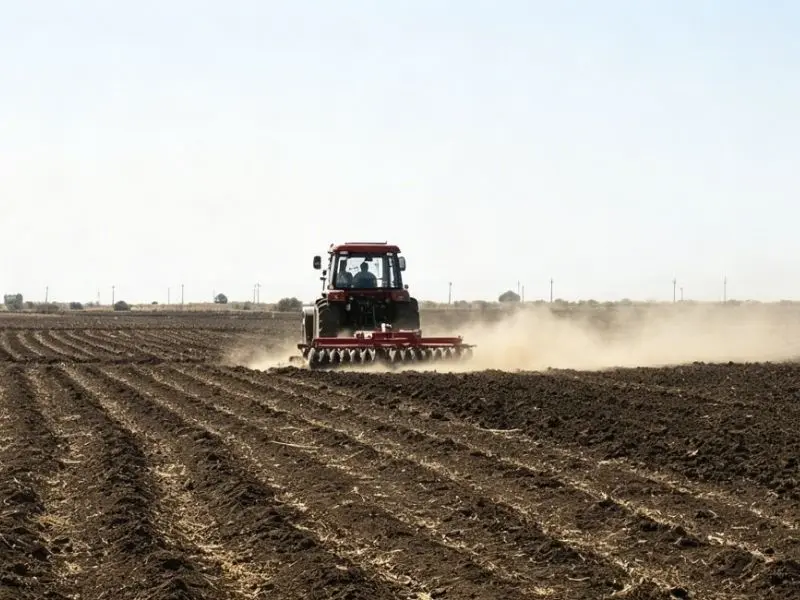
Agricultural mechanization in Africa only pays when the equipment matches the field. FAO has found that large imported machines often fail where plots are small, roads are poor and spare parts are hard to find, and that some equipment ends up unused for exactly these reasons. Implements are where that fit is won or lost. On dry, compacted soils, disc plows and heavy-duty disc harrows that hold a consistent working depth prepare a better seedbed in fewer passes, cutting fuel, time and labour before planting starts. Post-harvest performance matters just as much: poor handling still destroys up to 30 percent of what African farmers grow.
What to watch next
The next chapter will be decided by service networks, spare-part supply and operator training as much as by tractor numbers. For farmers, the practical question is no longer whether to mechanise, but which combination of service, machine and implement delivers the lowest cost per hectare